POSTURAL T-BOW®
POSTURAL T-BOW®
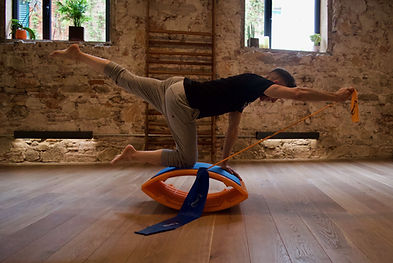
The philosophy of Postural T-BOW® provides unique resources to facilitate and enrich the acquisition of postures and postural sequences from a holistic perspective of personalized optimization.
The postural repertoire stems from Sandra Bonacina’s experience with the T-BOW® in physiotherapy and movement training (University of Zurich, since 1995) and is enriched by essential contributions from yoga, artistic gymnastics, dance, weightlifting and martial arts, open to insights from other sports disciplines. All resources are articulated on the concepts and practical proposals for movement education and training learned from Francisco Seirul·lo Vargas (University of Barcelona, since 1986, www.entrenamientodeportivo.org). Each person optimizes their postures through a personalized interaction of cognitive, coordinative, conditional, socio-affective, emotional-volitional, expressive-creative, bioenergetic and mental factors.
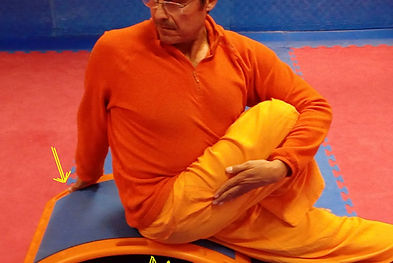
The unique characteristics of T-BOW®: (a) facilitate the acquisition of postures in people with significant limitations in balance, strength or flexibility; and (b) enrich postural challenges for all types of practitioners, from beginners to elite athletes.
The essence of Postural T-BOW® lies in static postures, very slow dynamic postures and postural sequences with a predominance of static postures. Dynamic postures at different speeds—that is, general and special dynamic coordination—complete the static-dynamic optimization of all human movement.
In developing postural attitude, priority is given to balanced strength development, flexibility and elasticity, global and segmentary balance-coordination, breathing and relaxation; fostering self-control and self-evaluation that allow for self-knowledge, the sublimation of emotions and creativity in each postural challenge.
These proposals are part of a comprehensive approach that includes optimized postural training, both static and dynamic, with and without equipment, and with and without the T-BOW®.
Areas of application of Postural T-BOW®
a) Hygienic-rehabilitative perspective: postural health for daily life, work activity and the re-education of postural alterations.
b) Expressive-creative perspective: posture for movement performance without injury, posture for expressive movement performance and posture for personal aesthetics.
c) Educational perspective: postural education oriented towards personal improvement for life.